Via Habsburg
Kulturroute des Europarates
Die Dynastie der Familie Habsburg(-Lothringen) war über Jahrhunderte hinweg zentraler Gestalter der europäischen Geschichte. Als Landesfürsten der von ihnen beherrschten Territorien sowie als gewählte Kaiser und Könige des Heiligen Römischen Reiches standen sie nicht nur geographisch im Zentrum Europas, sondern nahmen auch Einfluss auf die politische, wirtschaftliche und kulturelle Geschichte Europas und wurden somit Teil des europäischen materiellen und immateriellen Kulturerbes.
Die Via Habsburg, eine seit 2014 zertifizierte „Kulturroute des Europarates“, verbindet die einzelnen, historischen Schauplätze, die in engem Zusammenhang mit dem Haus Habsburg(-Lothringen) stehen, miteinander und mit der europäischen Geschichte. Dabei sorgt der Verein Via Habsburg dafür, dass das gemeinsame kulturelle Erbe erlebbar wird und zugleich nachhaltig erhalten bleibt.
Entlang der rund 1.000 km langen Kulturroute, die sich neben Österreich, auch über Deutschland, Frankreich und die Schweiz erstreckt, sind derzeit 84 Institutionen aus den Bereichen Kultur, Kunst und Tourismus Mitglieder des Vereins. Insgesamt werden über 150 touristische Ziele am Bodensee, im Schwarzwald, im Elsass und in Lothringen sowie in Tirol und, mit der Kaiser Villa in Bad Ischl, auch im Salzkammergut durch die Kulturroute verbunden.
Die aus der Geschichte entstandenen Verbindungen werden, u.a. anhand von vier etablierten Themenparcours, welche die Zentren der Macht, Burgen und Hofleben, sowie Kirchen, Klöster und Vorderösterreich umfassen, dargestellt. Diese vorgeschlagenen Reiserouten teilen die Via Habsburg in zusammenhängende Themenblöcke auf und erlauben es somit, die Vergangenheit entsprechend individueller Interessen zu erleben.
4 Themenwege
für eine erlebnisreiche Reise
Auf den Spuren der Habsburger zu wandeln bedeutet, zwischen Rhein und Donau fünf weltweit einzigartige Regionen zu entdecken!
Grenzübergreifende Touren führen Sie durch zeitlose Landschaften, zu in jeder Hinsicht außergewöhnlichen Orten und einem unvergleichlichen Kulturerbe. Aber das ist noch nicht alles! Begegnen Sie den Bewohnern des ehemaligen Vorderösterreichs und erleben Sie ihre Gastfreundlichkeit und fröhliche Natur. Ihren Gastgebern wird es eine Freude sein, Ihnen ihre Heimat und Lebenskunst näherzubringen. Erleben Sie eine geballte Ladung Authentizität und Geruhsamkeit!
Habsburg's centres of power
Residence cities and centres of power and politics.
Our rich European heritage
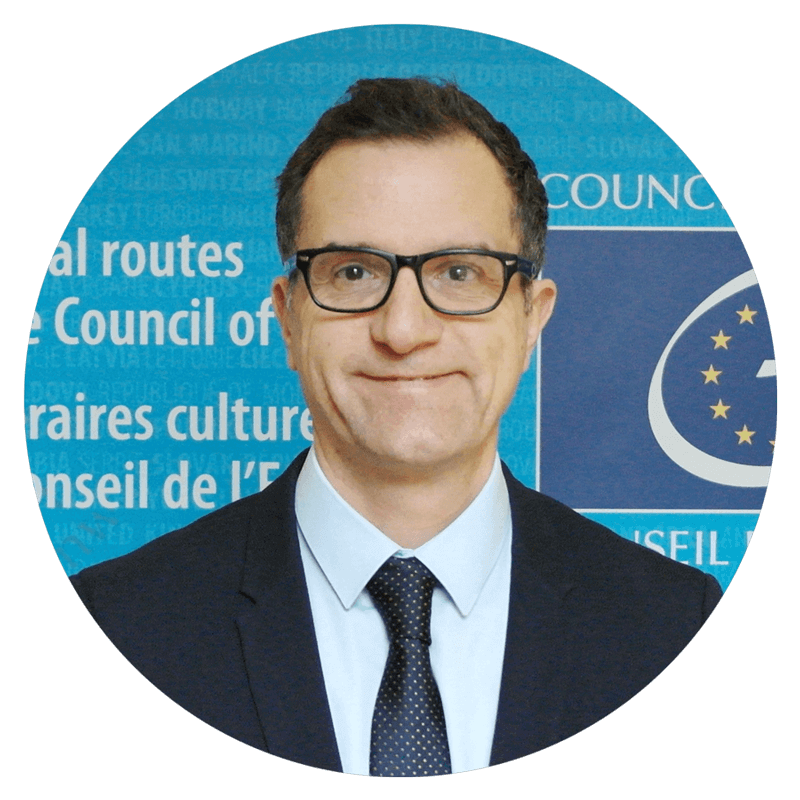
Statement by Stefano Dominioni
"The Via Habsburg represents a fundamental contribution to the understanding and appreciation of the historic, cultural and architectural heritage of Europe over many centuries. Certified as Cultural Route of the Council of Europe since 2014, the Via Habsburg provides an excellent example of our rich European heritage and traditions and the shaping of a common European identity. The Cultural Route implements exemplary activities in the field of academic research, cultural and artistic practices, exchanges for young Europeans, and sustainable cultural tourism across its many European network members."
Stefano Dominioni, Director at European Institute of Cultural Routes, Council of Europe